

Wisdom in Every Connection: Exploring the Heart of Indigenous-Oriented Research
A guest piece by Wahinkpe Topa (Four Arrows)
If we define research as that which studies and uses existing knowledge in ways to generate new understandings, then all of us must become researchers at some level.
— Wahinkpe Topa (Four Arrows), aka Don Trent Jacobs, Ph.D., Ed.D.
Four foundational cornerstones of Indigenous-oriented research include:
Relationality
Spirituality
Reciprocity
Responsibility
Our Guiding Council member, Wahinkpe Topa (Four Arrows), outlines these key framings below. He is a professor, renowned scholar, and author of 24 books plus numerous publications on Indigenous Worldview. To summarize his work’s mission in his own words, he wrote the following in a former newsletter:
I have spent half my life trying to convince educators and my students (and just about everyone else) that the only solution for re-balancing life on Mother Earth is to return to our original, nature-based, oneness worldview. I refer to this as “The Indigenous Worldview” because the few remaining Indigenous nations and groups within nations that have been forced to forget it still, against all odds, are holding on to it.
Why Care About Indigenous-Oriented Research?
Indigenous-oriented research stands as a proven approach to learning that is holistic and relational. Deeply rooted in a nature-based worldview, it encourages interdisciplinarity and has a high potential for discovery and creative applications. Authentic transformation and community benefit are fundamental goals. It seeks to transform structures and systems that perpetuate inequality and injustice.
Indigenous researchers acknowledge the need for decolonization. This calls for critical, counter-hegemonic thinking. At the same time, its non-dualistic perspective seeks solutions to problems by seeking complementarity between apparent opposites. Decolonizing incorporates or is followed by Indigenization. Thus, pre-colonial ways of being are re-balanced by restoring Indigenous worldview moral precepts, while at the same time honoring and supporting the unique place-based knowledge, languages, and traditions of First Nations.
Relationality
Relationality is the first of the four cornerstones for Indigenous-oriented research. It emphasizes the importance of building and nurturing authentic relationships, not just between researchers and participants, but also between human beings and the rest of the natural world. It underscores the idea that knowledge is not an isolated entity but emerges through ongoing interactions, conversations, and shared experiences. Research is not a one-way street but a two-way exchange, where participants are seen as collaborators and co-creators of knowledge.
Recognizing relatedness to all life on Earth is key to Indigeneity. The awareness of this interconnectedness offers a more holistic alternative to conventional academic and scientific perspectives. Such a oneness principle includes non-dualistic perspectives. This means that those seeking information to solve problems continually seek complementarity between apparent opposites.
The relational or kinship worldview celebrates the profound, complex and often mysterious oneness of all life. It recognizes the intrinsic value of every being, including fish, insects, animals, birds, rooted ones, rocks, waters and fellow human beings.
Such an approach to seeking ways to improve life does not merely describe a data-collecting process, but rather a way of life as well. It is a sacred undertaking on behalf of social/ecological justice and respect for diversity. It relates to and living a full life in flowing balance. It has a circular rather than a linear orientation that leads to better understanding of how our actions have consequences that ripple through the web of life.
Spirituality
Spirituality is the second cornerstone of Indigenous-oriented research. Generally speaking, in most traditional Indigenous belief systems, spirituality refers to recognizing and respecting a significant power in all things, from ants to zincite.
Moreover, such recognition is the foremost context for understanding reality and processes relating to it. Many Indigenous traditions involve engaging with the spirit world and drawing upon the wisdom of ancestors. This spiritual dimension underscores the idea that research is not a purely rational endeavor but a profound and sacred journey.
This spiritual power is unconditionally benevolent. Spiritual energies are by their nature creative, beautiful and generous. It is, however, also incomprehensible. Indigenous researchers recognize that there is a limit to the human ability to understand all things while living on earth. Attempts to fully describe life must respect this limitation and accept the mysterious.
To remove or ignore mystery in the pursuit of wisdom is to remove that which is sacred and reflects a lack of humility.
Thus, Indigenous-oriented research becomes a vehicle for unfolding ever-deeper levels of life’s great mysteries while increasing respect for the significance of life’s interconnections.
Defining spirituality as that which is significant in all things naturally presumes that all beings are part of the oneness of Nature. The Indigenous based researchers remain aware of this presumption at each step of the research approach. Still allowing for the unknowable, they can come closer to full understanding by using meditation, ceremony, intuition, art, music and stories to learn and to represent available knowledge.
Reciprocity
Reciprocity is the third cornerstone. This is about mutual dependence and aid and taking actions that give back that which is received. It is about helping one another reach a destination. It does not start with such an exchange, however. The source of reciprocity is based on awareness of the symbiosis we have with all of Nature.
We must realize how living a healthy life is impossible if we destroy any part of Nature without honoring caring and sharing with the web of life on Planet Earth.
Reciprocity must also focus on ecological injustice in our era where inequality causes significantly more suffering of people owing to environmental calamities caused by others.
Of course, when researching human subjects, reciprocity requires that research is shared and aims at positive contributions for participants and communities. It recognizes the power of communal knowledge and action. It is a collaborative process and involves a harmonious dance of learning and teaching. Reciprocity also relates to spirituality and relationality.
Maintaining the interdependent relationships between the visible and invisible in the world in reciprocal and respectful ways is conducive to living in balance and harmony with creation. — Tsosie et al, 2022
Responsibility
Responsibility is the fourth cornerstone of Indigenous approaches to understanding life and analyzing factors that can lead to problem solving. Responsibility means holding ourselves accountable for acting according to the principle of interconnectedness, spirituality and reciprocity.
While supporting rights of others is always important, Indigenous-oriented research emphasizes responsibility over rights because the focus is on using one’s gifts and skills to make the idea of rights unnecessary.
Being responsible in research protects individuals and communities by doing no harm in the first place. Responsibility is required for assuring rights are respected. It assures that rights are also not abused by those they are intended to serve and do not infringe on the rights of others. Responsibility leads us into action and accountability in ways that force us to be self-regulated with integrity.
In Closing
By embracing these themes that have contributed to ecological sustainability, we not only enhance the quality of our research but also contribute to our survival and a more just, equitable, and harmonious world. The four cornerstones presented here challenge us to expand our horizons and reevaluate our methods, guiding us toward a path of holistic understanding and respect for all forms of life.
References
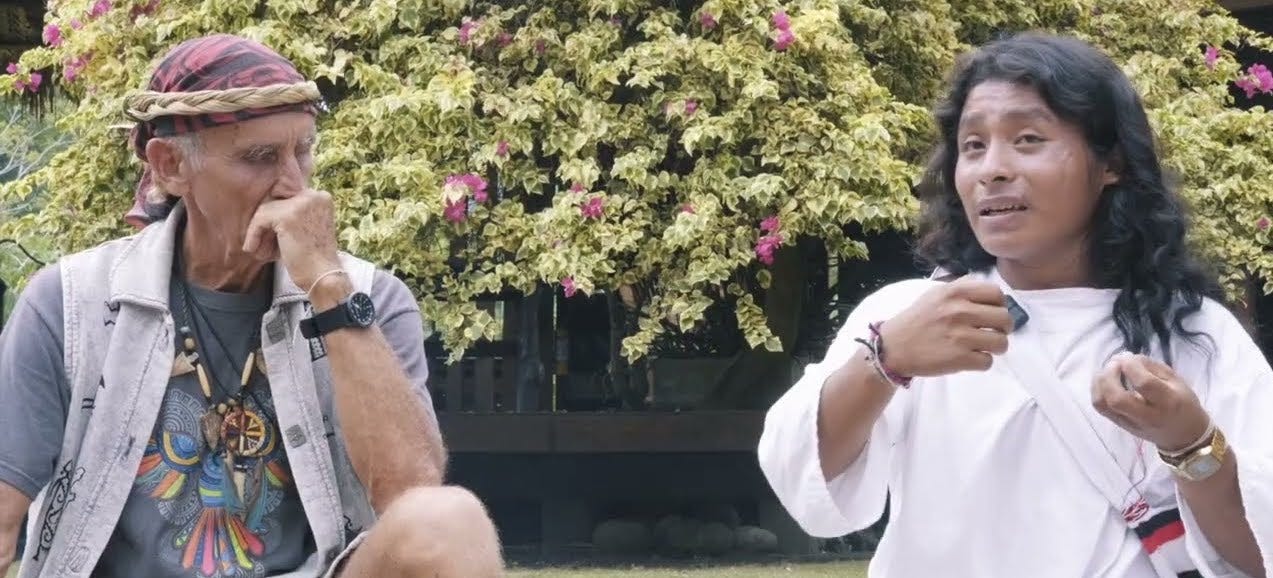
Learn more about Wahinkpe Topa’s (Four Arrows’), journey and advocacy work in this thought-provoking interview we recorded last year:
If you found this insightful, inspiring, or thought-prokoking in any way…
We’d love to hear your thoughts below. We’ll respond!
The Proven Sustainable™ Conversation Series is a fiscally sponsored project of the Center for Transformative Action, a 501(c)3 tax-exempt organization.